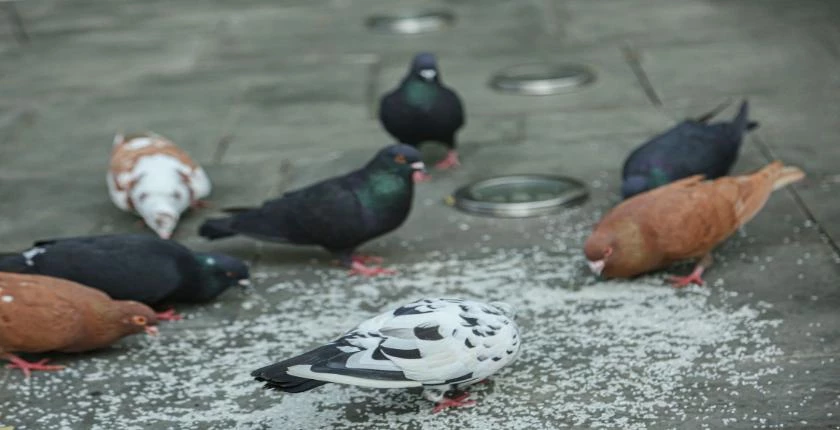
Pigeon Guano Cleaning
Get in touchAt Emergency Clean, we deliver professional pigeon guano cleaning and across the UK, providing specialist biological hazard remediation for residential, commercial, and industrial properties.
Our trained technical teams ensure that accumulated bird waste is removed safely, preventing the transmission of respiratory diseases and protecting building fabrics from acidic erosion. By managing the entire process from initial risk assessment to certified clinical waste disposal, we restore affected environments to a sterile and habitable state.
Can Emergency Clean Provide Deep Decontamination and Surface Sanitisation?
Full decontamination is achieved through our technical workflow by integrating mechanical cleaning with molecular-level sanitisation. We perform deep-level treatments of hard surfaces and extract saturated materials to ensure the primary source of the hazard is eliminated.
This comprehensive approach results in a sterile environment where persistent smells and pathogens are destroyed, preventing the long-term structural decay and health risks associated with accumulated waste that standard domestic cleaning cannot address.
How Much Does Pigeon Guano Cleaning Cost?
The cost of pigeon guano cleaning ranges from £300 to over £5,000, depending on the volume of waste, the height of the accumulation, and the accessibility of the site.
Costs are primarily influenced by the requirement for specialised access equipment like cherry pickers, the tonnage of hazardous biological material requiring licensed disposal, the complexity of the structural decontamination, and any necessary internal air quality testing following the deep clean.
Contact Emergency Clean to get customised prices for getting pigeon guano cleaning at your property.
What Does Our Pigeon Guano Cleaning Service Include?
We provide a comprehensive range of technical procedures for pigeon guano cleaning designed to ensure your property satisfies the highest hygiene and regulatory standards, including:
Hazardous Matter Removal – Systematically extracting solid droppings and nesting materials using HEPA-filtered vacuum systems to prevent the release of airborne spores.
Biocidal Surface Sanitisation – Applying hospital-grade disinfectants to neutralise pathogens such as Salmonella and E. coli at a molecular level.
Structural Integrity Audits – Inspecting masonry and roofing for corrosive damage caused by the high uric acid content found in bird waste.
ATP Verification Testing – Utilising bioluminescence technology to provide objective evidence that surface hygiene meets clinical standards post-clean.
Statutory Waste Disposal – Packaging and transporting all hazardous residues to licensed treatment facilities in accordance with UK environmental law.
Why Is Pigeon Guano a Serious Health Hazard for Properties?
Accumulated bird waste functions as a primary breeding ground for diverse fungal and bacterial pathogens that present significant risks to public health.
Cryptococcosis Transmission – Dried guano releases fungal spores that, when inhaled, can lead to serious respiratory infections or meningitis.
Histoplasmosis Risks – The presence of specific soil-based fungi in droppings can cause lung disease in occupants and maintenance workers.
Zoonotic Pathogens – Raw guano often contains Salmonella and E. coli, which can be tracked into building interiors via footwear or ventilation systems.
Ectoparasite Infestations – Nests associated with guano frequently harbour mites, ticks, and fleas, leading to secondary pest issues within the building envelope.
Acidic Structural Decay – The high concentration of uric acid corrodes stone, brickwork, and metal, leading to permanent structural damage if not remediated.
How Does Emergency Clean Safely Remove Pigeon Droppings and Contamination?
Safe removal involves a structured multi-stage extraction process that prioritises the containment of airborne particles. Our technicians implement a controlled dampening technique to suppress toxic dust, ensuring that pathogens do not become airborne during the physical removal phase.
We utilise high-efficiency extraction systems to maintain negative air pressure, which prevents the drift of spores into adjacent unaffected rooms, ensuring the building envelope is biologically safe for future occupants.
What Specialist Equipment and Protective Procedures Does Emergency Clean Use?
Our technical teams utilise high-performance hardware for pigeon guano cleaning to achieve the thorough eradication of biological hazards, featuring:
P3-Rated Respirators – Ensuring technicians are protected from inhaling microscopic fungal spores and hazardous particulates during the extraction process.
HEPA Air Scrubber Units – Removing airborne contaminants to restore safe air quality for future building occupants and workers.
Industrial Steam Cleaners – Using high-temperature vapour to sanitise porous masonry surfaces without excessive moisture saturation.
Thermal Fogging Machines – Dispersing biocidal clouds into inaccessible roof voids and ducts to neutralise hidden bacterial pockets.
Powered Access Platforms – Facilitating safe working-at-height procedures to reach high-level ledges and roofing gutters where guano accumulates.
Is Emergency Clean's Pigeon Guano Cleaning Fully Compliant With UK Regulations?
Every project managed by our team for pigeon guano cleaning is executed in strict accordance with the COSHH Regulations 2002. We ensure that your facility meets its statutory duty of care by maintaining a comprehensive environmental audit trail, which is essential for satisfying the requirements of insurers and the Health and Safety at Work Act 1974.
This commitment to compliance ensures all technical interventions are legally defensible, confirming that hazardous waste is managed through registered clinical treatment facilities.
How Quickly Can You Respond to Urgent Requests?
Rapid response attendance for pigeon guano cleaning is delivered by our 24/7 mobile engineering units, which are ready to mobilise at any hour to secure hazardous sites. We recognise that identified guano presents an immediate threat, especially near schools or food production facilities, so our specialists remain on standby throughout the year.
This swift intervention limits the window of risk, ensuring that residential and commercial clients can resume occupancy with the shortest possible delay.
Contact Emergency Clean for a consultation to get professional pigeon guano cleaning, which is fully compliant with your property.
Get in touch
Skip to
Gallery